

UAE leaders open World Laureates Summit in Dubai, gathering over 100 top scientists
UAE leaders open World Laureates Summit in Dubai, gathering over 100 top scientists
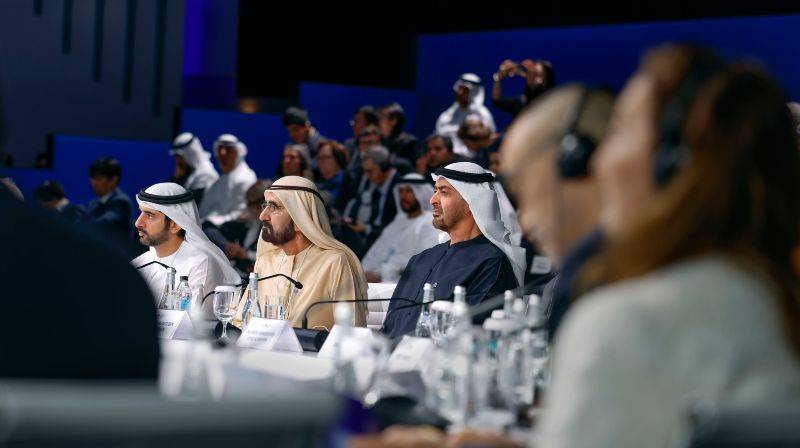
DUBAI – UAE President and Ruler of Abu Dhabi His Highness Sheikh Mohamed bin Zayed Al Nahyan and His Highness Sheikh Mohammed bin Rashid Al Maktoum, Vice President, Prime Minister and Ruler of Dubai, on Sunday inaugurated the World Laureates Summit, described as the largest global gathering of Nobel Prize winners and recipients of major international scientific awards.
The three-day summit brings together more than 100 leading scientists, laureates and research figures from around the world. The event is being held in conjunction with the World Governments Summit 2026, reinforcing links between scientific discovery and global policymaking.
Also present at the inauguration were Sheikh Mansour bin Zayed Al Nahyan, Vice President, Deputy Prime Minister and Chairman of the Presidential Court, and His Highness Sheikh Hamdan bin Mohammed bin Rashid Al Maktoum, Crown Prince of Dubai, Deputy Prime Minister and Minister of Defence.
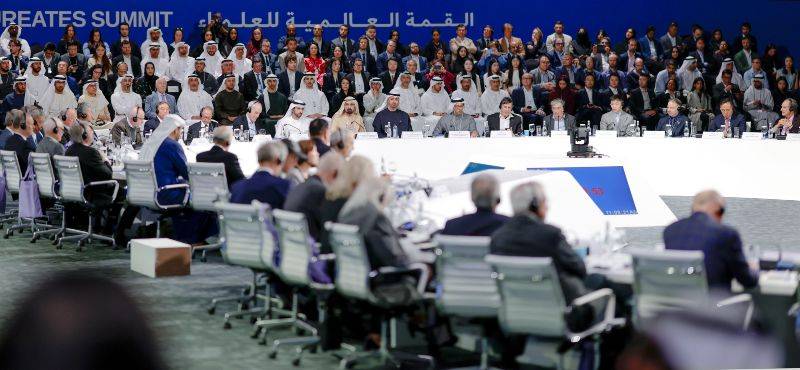
World Laureates Summit
The World Laureates Summit runs alongside the World Governments Summit, taking place from 3 to 5 February. The first day of the scientific gathering coincides with a joint day of engagement that brings laureates together with heads of state and government, ministers and leaders of international organisations participating in the government-focused forum.
During the opening, Their Highnesses were briefed on key discussions led by Nobel laureates and researchers representing a wide range of disciplines. The summit is positioned as an international platform for dialogue centred on long-term strategic thinking and multidisciplinary cooperation. Organisers highlighted the role of basic sciences in addressing global challenges at a time marked by economic, social and political pressures, alongside growing demand for innovative and sustainable solutions.
His Highness Sheikh Mohamed bin Zayed Al Nahyan emphasised that scientists are essential partners in shaping the future, underlining that investment in knowledge and scientific research is central to navigating global challenges. He said the UAE will continue to serve as a global platform that brings together visionaries and thinkers while supporting innovation for the benefit of humanity.
He stated that science and scientists are at the core of the UAE’s future vision, reflecting a belief that nations prioritising knowledge are best placed to lead global transformations. He added that the summit reflects the country’s commitment to building a comprehensive scientific ecosystem aimed at enhancing quality of life and supporting sustainable prosperity grounded in scientific principles.
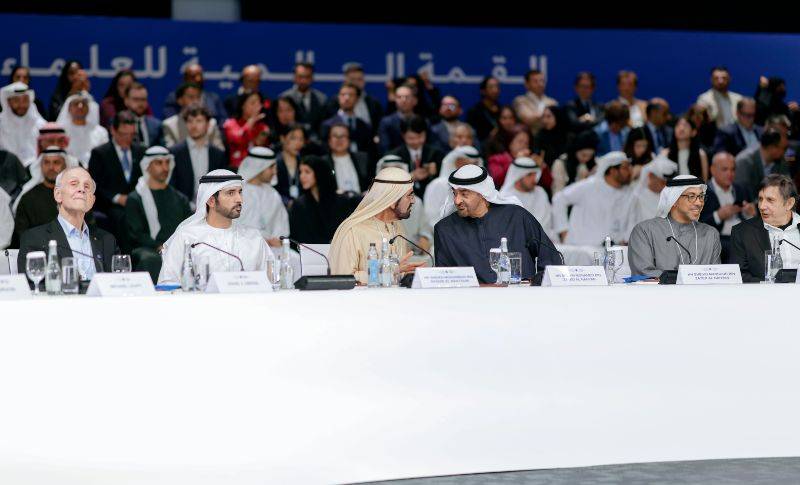
He noted that the world faces major challenges requiring unconventional solutions and highlighted the importance of such a scientific gathering. He said the responsibility of scientists extends beyond research centres to include active partnership in decision-making and in shaping development-focused policies. He expressed hope that dialogue at the summit would contribute creative solutions to global challenges and help ensure sustainable resource use for future generations. He also underscored the UAE’s role as a bridge linking scientific outputs with societal needs, while supporting research and emerging technologies in the service of peace and development.
His Highness Sheikh Mohammed bin Rashid Al Maktoum described the UAE as a long-standing nexus for visionaries and bold ideas. He said convening Nobel Prize laureates and leading scientists reflects an appreciation of science and those who advance it, and a commitment to opening doors for innovators to translate ideas into reality.
He stated that science represents the true wealth of nations and that scientists are architects of humanity’s future. He added that the UAE embraces talented minds, empowers researchers and provides the environment needed to turn ideas into achievements. He emphasised that people remain the country’s greatest asset and that investment in science supports sustainable development and future readiness, positioning the UAE as a global hub for knowledge and a magnet for talent.
Investing in knowledge
Mohammad Al Gergawi, Minister of Cabinet Affairs and Chairman of the World Governments Summit, said the vision of His Highness Sheikh Mohamed bin Zayed has helped establish the UAE as an incubator for intellect and a meeting point for global thought leaders. In his opening remarks, he stressed that building a nation depends not only on resources but also on people, describing investment in knowledge and science as the most significant investment in the future.
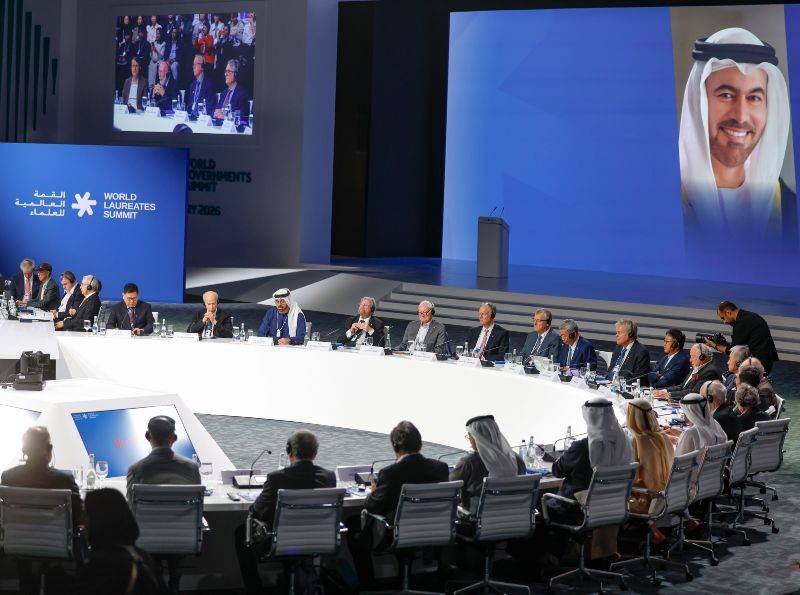
He said a nation that prioritises science, research and openness lays the foundations for sustained excellence. He pointed to a fundamental transformation in humanity’s journey of knowledge, driven by rapid advances in artificial intelligence and aspirations for longer, healthier lives. He noted that traditional boundaries between fields such as physics, computer science and biology are increasingly dissolving, calling for new approaches and greater interdisciplinary integration.
Al Gergawi described the summit as taking place at a pivotal time marked by political shifts, accelerating technological change and economic pressures, with rising concern over humanity’s future. In such circumstances, he said, the role of scientists is critical rather than secondary. He thanked participating scientists, noting that their presence in the UAE and engagement with leadership contributes to shaping a more humane, just and knowledgeable future.
New UAE Base
Professor Roger Kornberg, President of the World Laureates Association, Nobel Laureate in Chemistry and Professor of Medicine at Stanford University, revealed plans to establish a new WLA base in the UAE. The initiative aims to bring together scientists from across the world and strengthen the country’s position as a hub for scientific collaboration, research and innovation.
Kornberg described the summit as unprecedented in scope, diversity and breadth. He said the joint format places science alongside government, industry and finance, creating opportunities for scientists to engage directly with policymakers at a high level. According to Kornberg, the goal of the summit extends beyond explaining science to addressing broad societal questions.
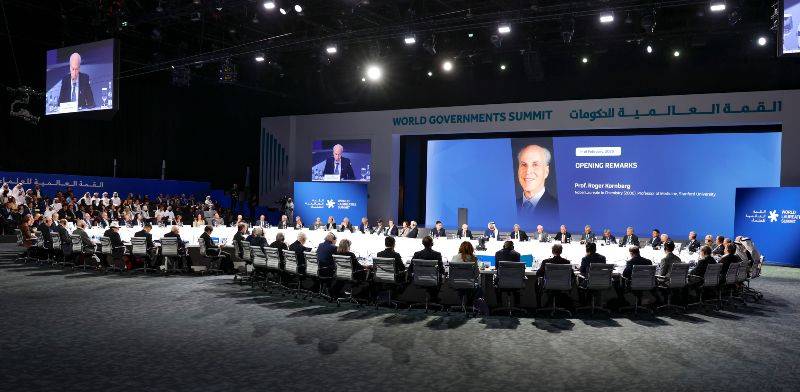
He highlighted themes explored in sessions, including the capabilities of artificial intelligence in discovery, the role of science in addressing environmental challenges and progress in tackling disease. He noted that partnership with the World Governments Summit ensures that scientific perspectives reach decision-makers at the highest levels.
Wang Hou, Executive Director and Secretary-General of the World Laureates Association, said the UAE’s appreciation of science and belief in knowledge as a driver of progress were key factors in convening the summit. He thanked members of the association, stating that their work has shaped human understanding and continues to advance humanity.
Summit agenda
The World Laureates Summit is organised in partnership between the World Governments Summit and the World Laureates Association. It brings together recipients of the Nobel Prize, Turing Award, Wolf Prize, Lasker Award, Fields Medal and Breakthrough Prize, along with other leading scientific award winners. The World Laureates Association comprises 187 scientists, including 78 Nobel laureates.
The programme is built around the theme “Basic Sciences: Scientific Consensus for Addressing the Challenges of Humanity”. It includes keynote addresses, plenary sessions, specialised forums, strategic roundtables and extended dialogues covering artificial intelligence and machine learning, quantum science and nanotechnology, biotechnology and genomics, data science and cryptography, and neurotechnology.
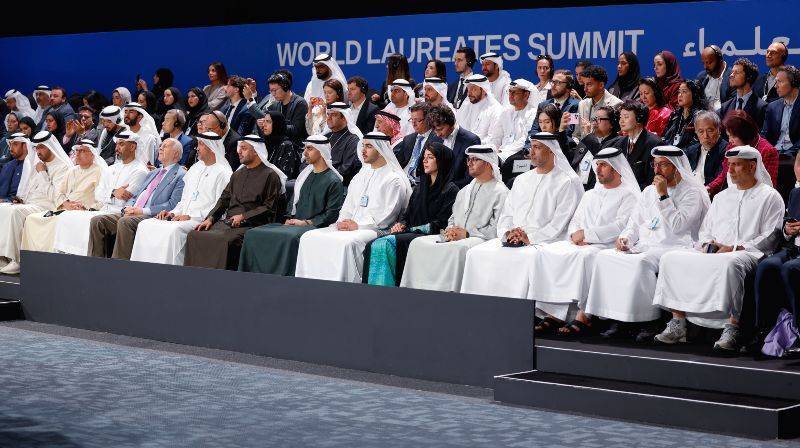
Discussions focus on the contribution of fundamental sciences to governance and economic systems, responsible development of emerging technologies and strengthening international scientific cooperation in a complex geopolitical landscape.
The first day’s agenda featured the AI Sciences Forum, including a session titled “Can AI Discover Anything?”, alongside forums on disruptive technologies, new energy and scientific discovery. The second day includes nine forums covering topics such as brain sciences, genetics, life sciences, physics, hospital leadership, blockchain science, carbon materials, nuclear physics and university leadership. The third day features the Young Scientists Forum and joint sessions linking the World Governments Summit and the World Laureates Summit, continuing exchanges between scientists and global decision-makers.